
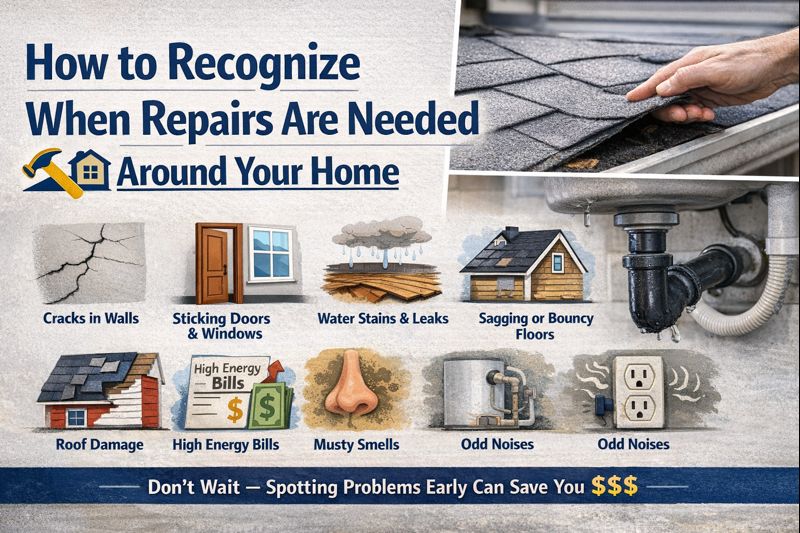
Your home is constantly communicating with you through sounds, smells, visible wear, and subtle changes. The challenge is knowing which signs are harmless and which mean it is time to act. Catching problems early can save thousands of dollars in repairs and help keep your home safe, comfortable, and structurally sound.
Here is a practical guide to recognizing when repairs are needed around your house and when it is time to call a professional.
1. Cracks That Weren’t There Before
Not all cracks are a cause for panic, but changes matter.
Watch for:
- Cracks in drywall that grow longer or wider over time
- Stair-step cracks in brick or block walls
- Cracks around doors and windows
What it could mean:
Minor settling is normal, but expanding cracks can indicate foundation movement or framing issues. If doors start sticking or windows will not open smoothly, that is another red flag.
2. Doors and Windows That Don’t Work Properly
If doors or windows suddenly become difficult to open or close, do not ignore it.
Possible causes include:
- Foundation shifting
- Moisture-damaged framing
- Warped materials from temperature changes
These issues often worsen over time and can affect insulation, security, and energy efficiency.
3. Signs of Water, Even Small Ones
Water damage is one of the most common and costly home problems.
Look for:
- Water stains on ceilings or walls
- Bubbling or peeling paint
- Musty smells
- Soft or spongy flooring
Why it matters:
Even a small leak can lead to rot, mold, and structural damage if left unchecked. If you see evidence of moisture, it is best to investigate immediately.
4. Sagging, Uneven, or Bouncy Floors
Floors should feel solid underfoot.
Warning signs include:
- Noticeable dips or slopes
- Floors that bounce when you walk
- Tile or hardwood separating
These symptoms may point to damaged joists, moisture issues, or foundation concerns, especially in older homes.
5. Exterior Wear and Tear
Your home’s exterior is its first line of defense.
Pay attention to:
- Peeling or cracked paint
- Rotting trim or siding
- Loose railings, steps, or decks
- Gaps around doors, windows, or siding
Exterior damage allows water, pests, and cold air inside. Regular maintenance and timely repairs help prevent much bigger problems later.
6. Roofing Red Flags
You do not need to climb on your roof to spot trouble.
From the ground, look for:
- Missing, curling, or cracked shingles
- Dark patches or sagging areas
- Shingle granules collecting in gutters
Inside, water stains on ceilings or attic dampness often point to roofing issues that need immediate attention.
7. Unusual Sounds and Smells
Your senses can alert you to problems before you see them.
Listen for:
- Persistent creaking or popping
- Buzzing near electrical outlets
Smell for:
- Musty odors, which may indicate mold or moisture
- Burning smells, which can signal electrical concerns
Electrical or moisture-related issues should always be addressed promptly for safety reasons.
8. Aging Materials and Systems
Even well-maintained homes need updates over time.
Common lifespan estimates:
- Roofing: 20 to 30 years
- Decks: 15 to 25 years, depending on materials and exposure
- Caulking and sealants: 5 to 10 years
If parts of your home are nearing the end of their expected lifespan, proactive repairs or replacements can help prevent emergency situations.
9. Energy Bills That Keep Climbing
A sudden or steady increase in heating or cooling costs can indicate:
- Poor insulation
- Air leaks around doors and windows
- Damaged siding or roofing
Addressing these issues can improve comfort and reduce monthly expenses.
10. Trust Your Gut
If something feels off, it probably is. Homeowners often notice changes long before major damage occurs. Ignoring small concerns rarely makes them go away, but addressing them early usually costs far less.
When to Call a Professional
If you are unsure whether an issue is cosmetic or structural, getting an expert opinion is always a smart move. Live Free Carpentry can identify underlying problems, explain your options, and help you plan repairs before they become emergencies.
Final Thought
Your home is one of your biggest investments. Regular check-ins, both inside and out, can help you stay ahead of repairs, protect your property value, and keep your family safe. When in doubt, it is always better to ask than to wait.


 Live Free Carpentry & Home Improvement